


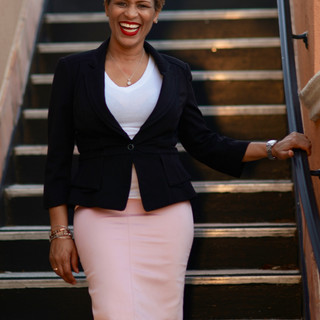
- La Tanya Walker
- May 17
- 5 min read
The danger isn’t always falling apart. Sometimes it’s becoming so good at surviving that no one notices the cost...including you.

There are women who appear strong, dependable, capable, and emotionally steady on the outside while quietly carrying levels of stress, pressure, and emotional exhaustion that never fully shut off.
They are the women people call first. The women who keep showing up. The women who continue producing, leading, supporting, caregiving, serving, building, organizing, responding, solving, and carrying. And because they are still functioning, no one recognizes the internal cost. Not even them.
For many women in leadership, ministry, business, caregiving, and high-responsibility roles, survival mode does not always look chaotic. Sometimes it looks polished, productive, high-performing, and deeply responsible.
That is what makes it dangerous.
Over time, chronic stress and emotional overload can become so normal that the body, mind, and nervous system begin adapting to pressure as a permanent way of living.
Eventually:
Anxiety starts feeling productive
Hypervigilance starts feeling responsible
Over-functioning starts feeling necessary
Exhaustion starts feeling normal
Emotional suppression starts feeling mature
The problem is not simply stress.
The problem is what prolonged survival mode slowly does to a woman internally.
When Survival Becomes a Lifestyle
Many women do not realize they have shifted from living intentionally to functioning almost entirely from emotional survival. Instead of asking:“ How am I really doing?” They ask:“ What still needs to get done?”
The internal focus changes.
The nervous system remains alert. The mind keeps scanning. The body struggles to fully settle. The emotional world gets pushed aside in order to keep life moving. And because responsibilities continue to be managed successfully, the internal strain often goes unnoticed for months, or even years.
This is especially common among women who have learned to carry pressure quietly.
Women who learned early that being needed became part of their identity.
Women who felt responsible for everyone else’s stability.
Women who learned that slowing down did not always feel emotionally safe.
Women who have been praised their entire lives for being “strong.”
Strength is not the problem.
Living in a constant state of emotional survival is.
The Hidden Cost of Constant Over-Functioning
One of the most overlooked effects of chronic stress is that many women lose connection with themselves while remaining deeply connected to their responsibilities. They continue handling life while becoming emotionally disconnected from their own needs. Sometimes the exhaustion is not just stress. Sometimes it is the quiet grief of realizing how long they have lived disconnected from themselves.
Over time, this can look like:
Difficulty resting without guilt
Constant mental activity and overthinking
Feeling emotionally exhausted but unable to slow down
Irritability or emotional numbness
Feeling disconnected from joy or peace
Trouble being fully present
Struggling to receive support from others
Feeling lonely even while surrounded by people
Increased anxiety, tension, or emotional shutdown
The body often carries what the mind keeps trying to push past.
In his well-known book, The Body Keeps the Score, psychiatrist and trauma researcher Bessel van der Kolk writes, “Being able to feel safe with other people is probably the single most important aspect of mental health.”
That statement matters more than many people realize.
When a woman’s nervous system has adapted to chronic emotional pressure, her body may stop fully experiencing safety, even in moments that are calm. This is why some women struggle to truly rest. Their environment may be quiet, but internally, their body still feels responsible for staying alert.
Anxiety That Looks Responsible

Not all anxiety looks obvious. Some anxiety looks highly capable. Some women do not recognize anxiety because it has never looked chaotic in their lives. It looked like preparation. Excellence. Anticipating needs before they surfaced. Staying emotionally composed. Remaining useful. Remaining dependable. Remaining in control.
It looks like:
Over-preparing
Constantly anticipating problems
Managing everyone else’s needs
Feeling responsible for outcomes
Difficulty turning the brain “off”
Staying emotionally guarded
Becoming uncomfortable with stillness
High-functioning anxiety is often rewarded in leadership cultures, ministry environments, and caregiving spaces. Women are praised for always being available. Praised for carrying heavy loads. Praised for pushing through exhaustion. Praised for “handling it all.”
But functioning well under pressure does not mean the pressure is harmless.
Many women become so accustomed to surviving that they no longer recognize when they are emotionally depleted.
When Relationships Become Functional Instead of Restorative

Another hidden cost of survival mode is relational exhaustion. Women who constantly operate in emotional management often become the steady one in every room. The listener. The fixer. The strong friend. The dependable leader. The emotionally aware one.
But many quietly struggle to:
Ask for help
Feel emotionally safe enough to fully exhale
Express their own needs honestly
Stop carrying emotional responsibility for others
Receive care without guilt
Eventually, relationships can begin revolving more around function than emotional connection. A woman may be deeply loved while still feeling emotionally unseen. That kind of exhaustion is difficult to explain because externally, everything still appears stable.
The Body Eventually Responds
The body is not designed to sustain chronic emotional overload indefinitely. Over time, prolonged stress can affect emotional wellness, physical health, concentration, sleep, mood, and overall nervous system regulation.
For some women, this may show up as:
Difficulty sleeping deeply
Persistent fatigue
Emotional overwhelm
Increased anxiety
Trouble concentrating
Headaches or tension
Emotional shutdown
Feeling constantly “on edge”
Burnout symptoms
Depressive symptoms
Feeling detached from themselves or others
This does not mean someone is weak. It means the body has been carrying more than it was designed to hold alone.
You Were Never Meant to Live in Constant Survival
There is a difference between being capable and being well. Many women have learned how to function while emotionally overwhelmed. But surviving is not the same as living. And eventually, the cost of chronic over-functioning begins showing up internally, even when life still appears successful externally.
The goal is not to stop being responsible. The goal is to learn how to live, lead, serve, and care for others without abandoning yourself in the process. That requires more than temporary rest.
It requires emotional awareness. It requires regulation. It requires healthier rhythms. It requires support. It requires learning how to feel safe enough to stop carrying everything alone.
A Different Kind of Strength
Strong & Steady™ Summer Wellness Series was created for women who are tired of functioning through emotional overload while appearing fine on the outside.
This is not about perfection. It is not about becoming less capable. And it is not about abandoning responsibility. It is about learning how to regulate, rest, process, and lead from a healthier place emotionally, mentally, and physically. Because true strength is not found in how much pressure you can survive.
Sometimes true strength looks like recognizing the cost of carrying too much for too long, and deciding not to keep living in survival mode.
If you have been feeling emotionally exhausted, constantly “on,” overwhelmed, anxious, or disconnected from yourself while still managing everyone and everything around you, you are not alone.
The Strong & Steady™ Summer Wellness Series offers a supportive space for women to slow down, increase emotional awareness, strengthen emotional regulation, and begin rebuilding steadiness from the inside out.
Registration is now open. For more information and to register for our upcoming psychoeducational wellness group, visit Authentic Perspectives Counseling & Coaching.
###

La Tanya D. Walker, M.Ed., MHCI
Mental Health Counselor Intern
Founder & Clinical Director
Authentic Perspectives Mental Health &
Wellness Center
"Specialist in Women's Mental Health"
Serving Women Across Central Florida


Comments